Glute exercises at home
Eight glute and leg exercises you can do at home with no equipment or a mini band, plus a 20-minute butt and legs routine.
Why it works
Your glutes are the biggest muscles in your body. Strong glutes power walking, climbing stairs and getting up from a chair, support your knees and lower back, and shape your lower body.
Bridges, hip thrusts, squats and lunges train them hard with just your body weight. A mini band and dumbbells add more challenge.
Safety first
- Keep your knees in line with your toes in squats and lunges.
- Squeeze your glutes at the top of bridges rather than arching your back.
- Hold a chair for balance on single-leg moves.
- Stop if you feel knee or back pain.
The 8 exercises
- 1
Glute bridge
Glutes & hamstrings- Lie on your back, knees bent, feet flat.
- Press through your heels and lift your hips.
- Squeeze at the top, then lower.
- How much
- 3 sets of 15
- Easier
- Lift halfway.
- Harder
- Hold a weight on your hips.
- 2
Single-leg hip thrust
Glutes- Shoulders on a sofa or bench, one foot on the floor.
- Drive your hips up on one leg.
- Lower slowly. Switch legs.
- How much
- 3 sets of 8–12 each leg
- Easier
- Both feet down.
- Harder
- Pause at the top.
- 3
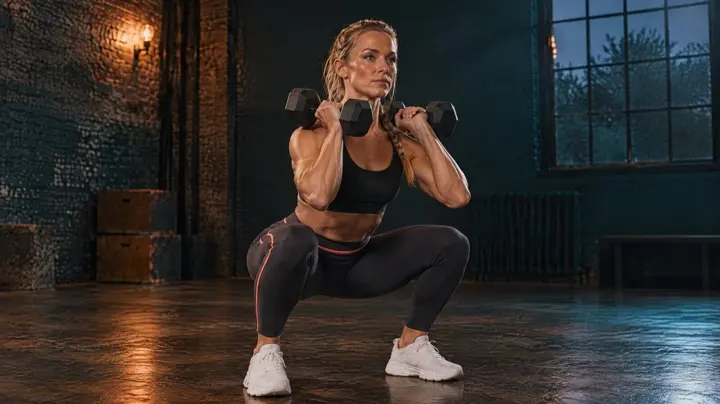
Squat
Legs & glutes- Feet shoulder-width apart.
- Sit back and down, chest tall.
- Stand and squeeze your glutes.
- How much
- 3 sets of 15
- Easier
- Squat to a chair.
- Harder
- Hold a dumbbell at your chest.
- 4
Reverse lunge
Glutes & thighs- Step back into a lunge.
- Lower until both knees bend.
- Push through the front heel to stand.
- How much
- 3 sets of 10 each leg
- Easier
- Hold a chair.
- Harder
- Hold dumbbells.
- 5
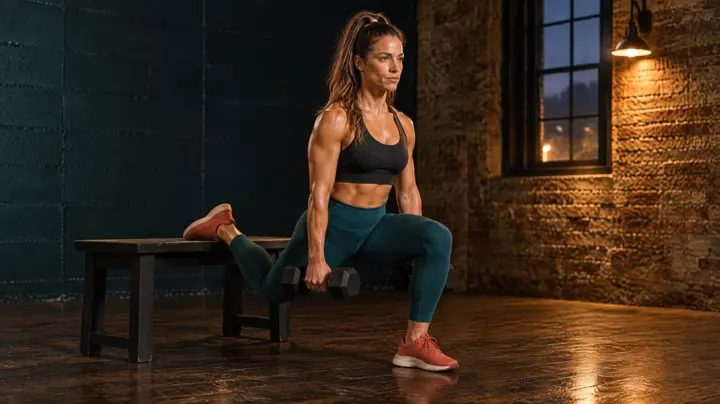
Bulgarian split squat
Glutes & thighs- Rest your back foot on a chair or sofa.
- Lower straight down on the front leg.
- Push back up.
- How much
- 3 sets of 8 each leg
- Easier
- Back foot on the floor.
- Harder
- Hold dumbbells.
- 6
Banded side walk
Outer glutes- Mini band around your thighs or ankles.
- Bend your knees slightly and step sideways.
- Keep tension on the band.
- How much
- 3 sets of 10 steps each way
- Easier
- No band.
- Harder
- Band at your ankles.
- 7
Donkey kick
Glutes- On hands and knees.
- Lift one bent leg back and up, foot towards the ceiling.
- Lower and repeat. Switch legs.
- How much
- 3 sets of 12 each leg
- Easier
- Smaller lift.
- Harder
- Add a mini band.
- 8
Fire hydrant
Outer glutes- On hands and knees.
- Lift one bent knee out to the side.
- Lower and repeat. Switch legs.
- How much
- 2 sets of 12 each leg
- Easier
- Smaller lift.
- Harder
- Add a mini band.
The routine
Rest 45 seconds between sets. Add a mini band for extra challenge.
| Part | Exercises | Time |
|---|---|---|
| Warm-up | Bodyweight squats, glute bridges, leg swings | 3 min |
| Strength | Squat, reverse lunge, Bulgarian split squat | 8 min |
| Glutes | Glute bridge, single-leg hip thrust, banded side walk | 6 min |
| Burnout | Donkey kicks, fire hydrants | 3 min |
How often
Train your glutes two or three times a week.
Progress with more reps, slower tempo, single-leg versions, a band, then dumbbells.
Want a plan that does this for you?
Train at Home has 12 butt and legs workouts, including Glute Builder, 13-Min Glute Bridge Burnout, Booty Band Burn, Standing Booty Band, Leg Burn and Intense Legs.
Coming soon to theApp StoreFrequently asked questions
Can you grow your glutes at home?
Yes. Bridges, hip thrusts, split squats and banded moves, progressed over time, can build your glutes without a gym.
What is the best glute exercise?
Hip thrusts and glute bridges train the glutes most directly; squats and lunges add overall leg strength.
Do I need a resistance band?
No, but a mini band is an inexpensive way to make side walks, kicks and bridges harder.
Sources
This guide is general information, not medical advice. Talk to your doctor or a physiotherapist before starting a new exercise programme, especially if you have a health condition.